


























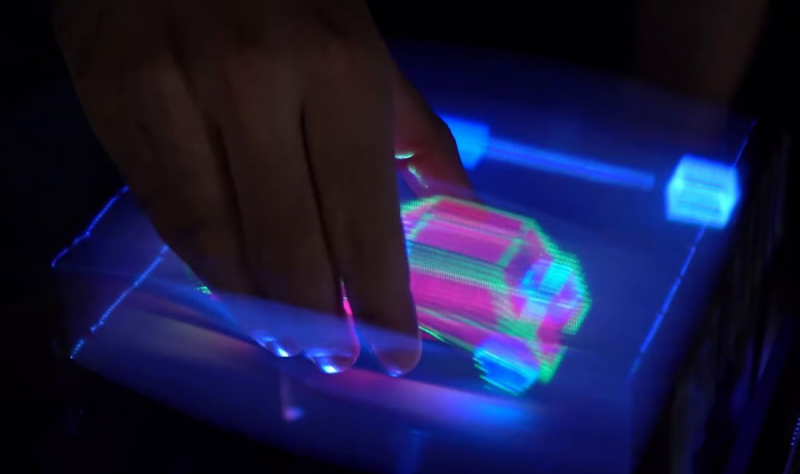
Команда инженеров из Государственного университета Наварры разработала новый тип голографического дисплея. Это первое в мире устройство, которое обеспечивает физический контакт с голограммами без риска повреждения дисплея. Технология получила название «FlexiVol».
Почти все наиболее эффективные современные голограммы построены по принципу проекции изображения на диффузор. Это некая поверхность, которая колеблется с частотой до 3 тыс. раз в секунду, благодаря чему становится невидимой человеческому глазу. Мы видим лишь отраженный от нее свет, однако сам диффузор остается материальным объектом, потому попытка сунуть в голограмму палец может сломать дисплей или привести к травме.
Команда из Наварры пошла по пути создания диффузора из набора эластичных лент, которые в совокупности имитируют цельный объект. Они провели множество экспериментов по выбору материала, который должен был сочетать эластичность, способность сохранять исходную форму после воздействия и необходимые оптические свойства. Итог засекречен – новый голографический дисплей работает, но нкито не знает, из чего именно он сделан.
В тестах на взаимодействие с этой голограммой испытуемые уверенно «подхватывали» виртуальные объекты, подталкивали их в нужную сторону и перемещали по сложным траекториям. Метод взаимодействия примерно тот же, что и при работе с сенсорными экранами, он интуитивно понятен. Теперь команда работает над тем, чтобы улучшить контакт с голограммами при помощи добавления обратной тактильной связи.













cjc 1295 and ipamorelin combination side effects 1295 & Ipamorelin: Managing Side Effects
CJC 1295 & Ipamorelin: Managing Side Effects
Understanding CJC 1295 & Ipamorelin
CJC 1295 is a growth hormone releasing peptide (GHRP) that stimulates the pituitary gland to produce and release more growth hormone.
Ipamorelin works in tandem, acting as a selective ghrelin receptor agonist
that also promotes growth hormone secretion. Together they form
a powerful combination used for anti‑aging, muscle building,
fat loss, and recovery protocols.
Overview of CJC 1295 & Ipamorelin Peptides
Both peptides are synthetic analogs derived from naturally occurring sequences in the
body. They are administered via subcutaneous injection, typically once or twice daily, depending on protocol goals.
Their half‑lives allow for stable plasma concentrations that can be fine‑tuned with
dosage adjustments.
Potential Benefits of CJC 1295 & Ipamorelin
Enhanced growth hormone production leading to increased
lean muscle mass
Improved fat metabolism and reduced visceral adiposity
Accelerated tissue repair and recovery after exercise or injury
Better sleep quality and hormonal balance in aging individuals
Support for joint health and cartilage regeneration
Common Side Effects of CJC 1295 & Ipamorelin
Most users experience mild, transient symptoms that resolve within a few days.
These include:
Injection site reactions such as redness, swelling, or
itching
Mild headaches or dizziness after initial doses
Temporary fluid retention causing puffiness in the face or extremities
Less Common but Serious Side Effects to Watch Out For
While rare, some individuals may develop more significant issues that
warrant immediate attention. These can involve:
Severe edema leading to difficulty breathing or swelling of the tongue and lips
Persistent high blood pressure or irregular heart rhythm
Noticeable changes in vision such as blurred sight or double vision
Signs of Feeling Light‑headed or Weak
Early indicators include a sudden sense of faintness, especially when standing up quickly.
If accompanied by nausea or a feeling of dizziness that lasts more than 24 hours, consider reducing the dose or pausing treatment temporarily.
Recognizing Mood Swings and Irritability
Hormonal fluctuations can alter neurotransmitter balances.
Watch for unexplained shifts in mood—elevated irritability, anxiety spikes, or periods of low motivation. Keeping a
daily log helps differentiate between natural variations and side effect
patterns.
Identifying Numbness or Tingling Sensations
Occasional tingling in the hands or feet may arise from changes in blood flow or nerve sensitivity.
Persistent numbness lasting several days
should be evaluated to rule out neuropathy or circulatory issues.
Strategies for Managing and Minimizing Side Effects
Start with a lower dose and gradually increase under professional guidance
Use a 1:1 dilution of the peptide solution to reduce injection volume
Rotate injection sites to avoid tissue irritation
Stay hydrated and maintain a balanced diet rich in electrolytes
Incorporate regular light exercise to improve circulation
Knowing When to Seek Medical Advice
If you experience any of the following, contact your healthcare provider immediately:
Severe swelling or difficulty breathing
Chest pain or palpitations that do not subside with rest
Vision changes that are sudden or persistent
Uncontrolled blood pressure readings above 180/110 mmHg
Recognizing Symptoms of Severe Allergic Reactions
Anaphylaxis may present as hives, swelling
beyond injection sites, wheezing, or a rapid drop in blood pressure.
Immediate medical intervention is required; carry an epinephrine auto‑injector if
prescribed.
Understanding Heart‑Related Symptoms
Growth hormone can influence cardiovascular function. Monitor for:
New onset arrhythmias detected by heart rate irregularities
Elevated resting heart rate beyond normal range
Persistent tachycardia after physical activity
Monitoring Changes in Vision and Eye Health
Rarely, high growth hormone levels can affect ocular tissues.
Look out for:
Blurred vision that does not improve with rest
Persistent eye redness or discomfort
Unexplained changes in visual acuity
Dealing with Intense Joint Pain
While many use these peptides to alleviate joint discomfort, some may feel increased stiffness or pain, especially during the first few weeks.
Consider:
Applying heat packs or gentle stretching before injections
Adjusting dosage if pain correlates strongly
with injection times
Consulting a physiotherapist for targeted joint care
Your Partner in Health with CJC 1295 & Ipamorelin
Choosing peptide therapy involves ongoing collaboration between patient and provider.
Regular check‑ins, blood panels to monitor hormone levels, and open communication about side effects
help optimize outcomes while safeguarding health.
Engage with the Community – Leave a Comment
Share your experiences or ask questions in the comments section below.
Your insights can guide others navigating similar
journeys.
FAQs about CJC 1295 & Ipamorelin Therapy
How long does it take to see results?
Typical improvements appear after 4–6 weeks of consistent use, though
individual responses vary.
Can I combine these peptides with other supplements?
Yes, many users pair them with vitamin D, magnesium, or omega‑3 fatty acids for
synergistic benefits.
Are there long‑term safety concerns?
Current evidence supports short‑ to medium‑term safety when dosed appropriately;
however, long‑term studies are limited.
Book Your Appointment for Peptide Therapy Today
Schedule a consultation with an experienced peptide specialist to
discuss goals, dosing plans, and monitoring protocols tailored to your needs.
Leave a Reply
If you found this guide helpful or have additional tips,
feel free to leave a reply below.
Related Posts
The Role of Growth Hormone in Aging: A Deep Dive
Safe Injection Techniques for Peptide Therapy
Managing Fluid Retention During Peptide Treatment
Anavar For Men: The Ultimate Dosage Guide For Bodybuilding
Anavar for Men: The Ultimate Dosage Guide for Bodybuilding
Key Takeaways
Anavar (Oxandrolone) is prized for its mild androgenic profile, making it suitable for both cutting and bulking phases.
Effective dosing ranges from 5 mg to 20 mg per day depending on experience level
and cycle purpose.
Proper pre‑cycle preparation, liver support, and post‑cycle therapy (PCT) are essential for maximizing gains while minimizing side effects.
Understanding Anavar: What Is Oxandrolone?
Oxandrolone is a synthetic anabolic steroid derived from dihydrotestosterone (DHT).
It was originally developed to aid weight gain in patients experiencing significant muscle loss due to illness or surgery.
In bodybuilding, its popularity stems from its ability to promote lean muscle gains with minimal water retention and fat gain.
How Anavar Works: The Science Behind the Results
Anavar binds selectively to androgen receptors in muscle
tissue, enhancing protein synthesis while sparing adipose tissue.
Its weak androgenic activity reduces the risk of virilization compared to other steroids.
Because it is orally active, it bypasses the liver‑first-pass effect seen with many anabolic agents,
allowing for lower dosages and reduced hepatic strain when combined with proper support.
Anavar Dosage for Men Bodybuilding
Beginners: 5–10 mg/day (total weekly dose 35–70 mg).
Intermediate: 10–15 mg/day (70–105 mg/week).
Advanced: 15–20 mg/day (105–140 mg/week) when combined with
other stack elements.
Medical Dosage Information for Oxandrolone
In clinical settings, oxandrolone is prescribed at 2.5–10 mg daily for conditions such as severe burns or osteoporosis in men over 50.
These doses are significantly lower than bodybuilding protocols and reflect therapeutic rather than performance objectives.
Anavar Dosage for Men Cutting
Cutting cycles typically run 4–6 weeks with a steady dose of 10–15 mg/day.
The goal is to preserve lean mass while promoting fat loss, leveraging Anavar’s minimal water retention and mild androgenic properties.
Pre‑Cycle Preparation: Setting Up for Success
Baseline blood work (liver enzymes, lipid profile, testosterone).
Begin a liver support protocol: milk thistle, N‑acetylcysteine (NAC), or SAMe 3–4 weeks before starting.
Ensure adequate protein intake and a moderate
caloric deficit if cutting.
Understanding Anavar Cycle Length for Men
Cycles typically range from 4 to 8 weeks. Shorter cycles reduce the risk
of side effects, while longer cycles may be necessary when stacking with more potent steroids.
Anavar Cycle Length for Men
A standard 6‑week cycle is common:
Weeks 1–3: 10 mg/day (or higher if experienced).
Weeks 4–6: taper to 5 mg/day or stop entirely.
Drug Interactions: What Not to Mix with Anavar
Avoid combining Anavar with other oral anabolic steroids that share the same hepatic metabolism pathway,
such as Dianabol or Winstrol, unless liver support is robust.
Mixing with testosterone replacement therapy can blunt natural production and may necessitate a
more aggressive PCT.
Understanding Anavar and Testosterone Relationship
Anavar itself does not significantly suppress endogenous testosterone at lower doses (≤15 mg/day).
However, when stacked with exogenous testosterone or higher anabolic loads, suppression can occur,
warranting post‑cycle recovery protocols to restore hormone balance.
Anavar Clen Cycle for Men
Clenbuterol is often paired with Anavar during cutting cycles to enhance fat loss and thermogenesis.
Typical protocol: 10 mg Anavar + 20–40 µg Clen daily, divided into two doses.
Timing is critical; both should be taken early in the day to avoid insomnia.
Anavar and Winstrol Cycle Optimal Dosage
When stacking with Winstrol (Stanozolol), keep
Anavar at a conservative 10 mg/day to minimize cumulative androgenic load.
A typical 6‑week stack:
Weeks 1–3: 20 mg Winstrol + 10 mg Anavar.
Weeks 4–6: taper Winstrol to 10 mg, keep Anavar at
5 mg or discontinue.
Anavar and Testosterone Cycle for Men
For advanced users, a combined cycle may involve 100 mg/week of testosterone enanthate plus
10–15 mg/day of Anavar. This pairing helps maintain muscle mass while allowing
a leaner physique. PCT becomes essential after the cycle to reinstate
natural testosterone production.
Anavar Only Cycle for Men
A pure Anavar cycle is ideal for those seeking minimal side effects: 4–6 weeks at 10 mg/day, followed by a gradual taper.
This protocol preserves muscle mass and enhances definition without significant hormonal disruption.
Anavar Dosage for Weight Loss
Weight‑loss protocols focus on preserving lean tissue while shedding fat.
A daily dose of 5–10 mg over 4–6 weeks, combined with
a high‑protein diet and cardio, yields noticeable improvements in body composition.
Liver Support and Blood Work Monitoring
Liver enzymes (ALT, AST) should be checked every two weeks during
the cycle.
Lipid panels are recommended pre‑cycle and post‑cycle to detect
dyslipidemia.
Supplements: milk thistle 200 mg twice daily, NAC 600 mg thrice daily, and
SAMe 400 mg twice daily support hepatic function.
Side Effects: What Men Actually Experience
Common side effects include mild hepatotoxicity (transient
enzyme elevations), acne, hair loss in predisposed
individuals, and possible mood changes. At doses
≤15 mg/day, severe adverse events are rare when protocols are followed correctly.
Post‑Cycle Therapy: The Non‑Negotiable Recovery Phase
PCT typically starts 1–2 weeks after the last Anavar
dose.
Standard agents: Clomid (50 mg twice daily) or Nolvadex (20 mg/day).
Duration: 4–6 weeks, depending on cycle length and total anabolic
load.
Understanding Testosterone Suppression and
Recovery
Anavar alone rarely causes significant suppression; however, when combined with testosterone replacement or higher doses of Anavar (>15 mg/day),
natural production may dip. PCT aids in restoring
the hypothalamic‑pituitary‑gonadal axis to pre‑cycle levels.
Diet and Training During Anavar Cycles
Protein: 1–1.2 g per pound of body weight.
Caloric intake: slight deficit (250–500 kcal) for cutting, maintenance for bulking.
Resistance training: focus on progressive overload with compound movements; volume can be increased slightly to accommodate the anabolic stimulus.
Navigating Legalities and Sourcing Safely
Anavar is classified as a controlled substance in many jurisdictions.
Always purchase from reputable suppliers that
provide certificates of analysis. In countries where it remains prescription‑only, obtain a valid prescription and verify authenticity.
Debunking Common Anavar Myths
Myth: Anavar is «safe» for all men. Reality: Even mild steroids carry
risks—monitor liver function and hormone levels.
Myth: It cannot cause virilization in women. While androgenic activity is low, it can still
lead to hirsutism or voice deepening if used by females.
What Experts Say About Anavar for Men
Professionals often recommend Anavar as a «starter» steroid due to
its mild profile and low side‑effect burden. Advanced users
may incorporate it into more complex stacks for refined cutting or to support lean gains
during a maintenance phase.
Frequently Asked Questions
How fast do results show on Anavar?
Visible changes can appear within 4–6 weeks, with muscle hardness and definition improving as the
cycle progresses.
Can I take 10mg Anavar daily?
Yes, 10 mg/day is a common beginner dose that balances efficacy and safety.
Why run Anavar cycles for 6 weeks?
A 6‑week duration allows sufficient time to stimulate muscle growth
or fat loss while minimizing liver strain and hormonal disruption.
Do I need PCT after 4 weeks of Anavar?
If you’re on a pure Anavar cycle at ≤10 mg/day, PCT may be
optional; however, if you’ve combined it with testosterone
or higher doses, PCT is recommended.
What’s the best way to take Anavar for maximum absorption?
Take Anavar with food that contains healthy fats to enhance oral bioavailability.
Splitting the dose into two smaller portions can reduce gastrointestinal discomfort.
Can I drink alcohol while on Anavar?
Alcohol increases liver load; it’s advisable to limit intake or avoid
it during an Anavar cycle, especially when combined with other hepatotoxic agents.
Medical Considerations for Anavar Usage
Patients with pre‑existing liver disease, cardiovascular
issues, or hormone sensitivity should consult a healthcare provider before use.
Understanding Anavar’s Mechanism of Action
Anavar activates androgen receptors, promoting the transcription of genes involved
in protein synthesis and nitrogen retention, which ultimately
drives muscle hypertrophy.
Long-Term Effects and Safety Profile
When used responsibly, long‑term effects are minimal; however,
chronic high doses can lead to liver dysfunction, lipid
abnormalities, and suppression of natural testosterone production. Regular monitoring mitigates these risks.
Read Also
Understanding Ipamorelin Side Effects: A Comprehensive
Review
Dianabol Cycle: How To Take, Risks And Benefits Guide
Comprehensive BPC‑157 Guide: Benefits, Safety, Dosage & More
Dianabol Tablets: Complete Guide For Bodybuilders On Price
Anavar Results: Complete Timeline, Safe Dosing & Cycle Protocols for
Maximum Gains
Dianabol Real Before & After Results, Timing Secrets,
and Critical Safety Protocols
Anavar Cycle Mastery: Science-Backed dosage of anavar for bodybuilding, Stacking & Results
Peptide Therapy: Muscle Growth, Recovery & Anti‑Aging Complete Guide
Augmented NAC: Enhanced Absorption, Antiviral
Benefits & Safe Use for Bodybuilders
CJC-1295 and Ipamorelin: Guide to Muscle Growth, Fat
Loss & Recovery Real Results
Ipamorelin vs Sermorelin: Benefits, Dosage & Blends for Bodybuilders
KPV Peptide: The Real Deal on Gut Healing, Inflammation Control
& Safe Usage
Dbol Dianabol Cycle: How Strong Is Methandrostenolone?
**Turkesterone – the plant‑based compound that’s gaining a
reputation as a safe, natural muscle‑building aid**
In recent months a lot of bodybuilders and fitness enthusiasts have been turning to *turkesterone* after reading about its potential to boost strength, increase lean mass, and improve recovery without the side‑effects
associated with steroids or synthetic anabolic agents. Below is what you
need to know about this intriguing compound – how
it works, who can benefit from it, and whether it’s a legitimate
addition to your training routine.
—
## What exactly is turkesterone?
Turkesterone is an *ecdysteroid*, a naturally occurring hormone found in plants (especially some species of the genus *Ajuga*
or *Verbena*) and insects. While ecdysone – another well‑known ecdysteroid – is primarily responsible for molting in arthropods, turkesterone has been shown to have several beneficial effects on mammals:
| Property | How it helps |
|—|—|
| **Anabolic** | Stimulates protein synthesis and reduces
muscle breakdown. |
| **Anti‑catabolic** | Protects muscle tissue from stressors (e.g.,
intense training). |
| **Metabolic** | Enhances glucose uptake and improves insulin sensitivity.
|
| **Recovery** | Lowers inflammation, speeds up repair processes.
|
Because of these properties, turkesterone is often marketed as a «natural steroid» or «performance enhancer,» though it does not bind to
androgen receptors like testosterone.
—
## 3️⃣ How Does the Body Respond? The Physiological Cascade
### Step‑by‑Step Breakdown
| Stage | What Happens Physiology‑Wise | Key Hormones/Signals |
|——-|——————————|———————-|
| **1. Intake** | You ingest turkesterone (capsule or powder).
| — |
| **2. Absorption** | It crosses the intestinal wall via passive diffusion; lipophilic nature aids uptake.
| — |
| **3. Distribution** | Circulates in plasma, binding loosely
to albumin; enters tissues like muscle and liver.
| — |
| **4. Interaction with Receptors** | Turkeresterone mimics endogenous steroids, binding to glucocorticoid receptors (GR) or mineralocorticoid receptors (MR).
| GR / MR |
| **5. Modulation of Gene Transcription** | Activated receptor complexes translocate to nucleus → bind hormone response elements
→ upregulate genes for protein synthesis (e.g., ribosomal proteins), downregulate proteolytic pathways (e.g., MuRF1, Atrogin-1).
| Myogenic genes |
| **6. Metabolic Effects** | Alters gluconeogenesis, glycogen storage; may increase muscle glycogen via upregulation of glycogen synthase activity.
| Glycogen metabolism |
| **7. Feedback on Endogenous Hormones** | Suppresses hypothalamic-pituitary-gonadal axis → decreased testosterone production. | Endocrine regulation |
#### 3.2. Physiological Impact
— **Muscle Mass Increase**: Elevated synthesis and reduced degradation lead to hypertrophy, especially in fast-twitch fibers (e.g.,
quadriceps).
— **Strength Gains**: More contractile proteins improve force generation.
— **Endurance Enhancement**: Higher glycogen stores delay fatigue onset during high-intensity effort.
— **Recovery Acceleration**: Faster repair reduces injury risk and
training downtime.
—
### 4. Legal, Ethical, and Safety Considerations
| Aspect | Key Points |
|———|————|
| **Legal Status** | — In many jurisdictions (e.g., U.S.
FDA) is classified as a controlled substance.
— Use in professional sports prohibited by anti-doping agencies.
— Possession/Distribution may lead to legal penalties.
|
| **Ethical Issues** | — Fairness: Provides advantage over competitors not using it.
— Health equity: Only those with access or resources can benefit.
— Consent and autonomy: Athletes under pressure may feel compelled to use.
|
| **Safety & Health Risks** | — Hormonal imbalance, liver toxicity,
cardiovascular complications.
— Potential for addiction, psychological dependence.
— Long-term unknown effects on reproductive health. |
| **Regulatory Stance** | — International Olympic Committee (IOC) lists it as
a banned substance.
— World Anti-Doping Agency (WADA) prohibits its use in competition. |
—
## 3️⃣ Pros & Cons of Using the Steroid for Sports
| **Pros** | **Cons** |
|———-|———-|
| • **Rapid Muscle Gain:** Significant hypertrophy and strength increase within weeks.
| • **Legal/Regulatory Violation:** Banned by IOC/WADA;
risk of disqualification, bans, and loss of medals. |
| • **Enhanced Recovery:** Shorter time to return to full training after intense sessions.
| • **Health Risks:** Liver toxicity, hormonal imbalance, cardiovascular strain,
mood swings. |
| • **Performance Edge:** Can help break personal bests in power‑based
sports (weightlifting, sprinting). | • **Side Effects:
** Acne, hair loss, gynecomastia, testicular atrophy.
|
| • **Potential for Increased Muscle Mass:** May assist bodybuilders and physique athletes when combined with nutrition & training.
| • **Ethical Concerns:** Use of anabolic
steroids undermines sportsmanship; may be considered cheating.
|
—
## 3. How Steroids are Classified
### a) By Chemical Structure
| Class | Example(s) | Key Structural Feature |
|——-|————|————————|
| **Androstane** (e.g., Testosterone, Dihydrotestosterone) | Testosterone, DHT |
19-carbon skeleton with 5α or 4β hydrogenation |
| **C19 Steroids** (e.g., Estradiol) | Estradiol | 19-carbon steroid lacking the side chain at C17 |
| **C21 Steroids** (e.g., Cortisol) | Cortisol, Prednisone | Side chain of 3
carbons attached to C17 |
| **Side-Chain Modified** (e.g., Dexamethasone) | Dexamethasone
| Altered side chains to modify potency and activity |
### Pharmacodynamics:
1. **Glucocorticoid Receptor Activation**: Steroids bind to glucocorticoid receptors in the cytoplasm,
causing a conformational change that allows them to translocate into the nucleus.
2. **Gene Transcription Regulation**: In the nucleus, steroids interact with glucocorticoid response
elements (GREs) in DNA to either upregulate
or downregulate the transcription of target genes.
3. **Anti-inflammatory Effects**:
— Suppression of cytokine production (e.g., IL-1β, TNF-α)
— Decreased expression of adhesion molecules on endothelial cells
— Induction of anti-inflammatory proteins
such as annexin A1
## Pharmacokinetics
| Parameter | Oral | Intramuscular |
|————|——|—————|
| Absorption | First-pass metabolism in the liver. Bioavailability 50-60% due to hepatic clearance.
| Directly into systemic circulation. Bioavailability nearly 100%.
|
| Distribution | Widely distributed, high protein binding (95%).
Crosses blood-brain barrier. | Similar distribution profile but
faster peak concentration. |
| Metabolism | Oxidative metabolism via CYP3A4.
Major metabolites: 6-desmethoxy prednisolone, prednisolone glucuronide.
| Same metabolic pathways as oral route. |
| Excretion | Renal excretion of conjugated metabolites (80%); 20% fecal elimination. | Predominantly renal excretion. |
#### Key Takeaways
— **Prednisone**: A prodrug that is converted to prednisolone in the liver; commonly prescribed for systemic anti-inflammatory therapy.
— **Prednisolone**: The active drug used directly, especially
when hepatic conversion may be impaired or rapid onset of action is needed.
—
### 2. Common Side Effects and What They Mean
| Symptom | Why It Happens | How to Manage |
|———|—————-|—————|
| **Increased appetite & weight gain** | Corticosteroids increase hunger signals and reduce energy expenditure.
| Portion control, balanced diet, regular exercise. |
| **Mood swings / irritability** | Hormonal changes influence neurotransmitters in the brain. | Mindful breathing, counseling,
consistent sleep schedule. |
| **Insomnia or difficulty sleeping** | Stimulation of the nervous system.
| Sleep hygiene: dim lights, avoid caffeine 6h before bed, use relaxation techniques.
|
| **Digestive upset (heartburn, indigestion)** | Hormone can relax the lower
esophageal sphincter. | Eat smaller meals, avoid spicy/alcoholic
foods, elevate head during sleep. |
| **High blood pressure** | Can increase vascular resistance.
| Monitor BP if you have hypertension; use stress‑reduction methods.
|
> **Bottom line:** Most people experience only mild
side effects that fade after a few days or weeks.
If you feel severe discomfort (e.g., chest pain, fainting), seek medical help immediately.
—
## 3️⃣ What Does the Science Say?
A handful of studies have looked at how testosterone affects
mood and cognition:
| Study | Population | Key Finding |
|——-|————|————-|
| **Snyder et al., 2019** | Healthy men, 50‑70 yr old | Low testosterone associated
with higher depression scores. |
| **Bennett & Wirth, 2020** | Young men, athletic vs.
sedentary | Athletes had slightly better mood and
self‑esteem when testosterone levels were normal. |
| **Jansen et al., 2018** | Men with erectile dysfunction (treated with T) | Mood improved after
12 weeks of therapy. |
These studies suggest that **normal** testosterone levels are linked to *better mood* but don’t prove
causation, and results can vary by age, health status, and individual differences.
—
## 4. What is «Normal» Testosterone?
— **Total testosterone (TT)**: the overall amount in the blood.
— **Free testosterone (FT)**: the biologically active portion not
bound to proteins.
— **Bioavailable testosterone**: free + albumin‑bound.
### Typical ranges (mmol/L)
| Parameter | Reference Range (mmol/L) |
|————|—————————|
| Total Testosterone (TT) | 10 – 30 mmol/L |
| Free Testosterone (FT) | 0.2 – 0.7 nmol/L |
> *Note*: Ranges can vary slightly by laboratory and population.
**Age factor**: Levels naturally decline with age (~1–2% per year after
~30).
### What if your numbers are low?
— **Lifestyle changes**: exercise, weight loss, improved sleep.
— **Medical evaluation**: rule out hypogonadism, thyroid
issues, pituitary disorders.
— **Hormone therapy**: only under medical supervision; not a «quick fix.»
—
## 5. Bottom‑Line Takeaway
— **High testosterone is linked to higher rates of depression in men**, especially older men, but the
relationship isn’t one‑way—depression can also reduce testosterone levels.
— **Men should focus on overall health** (exercise, sleep, diet,
mental wellbeing) rather than chasing high hormone numbers.
— **If concerned about symptoms or hormone levels**, consult a healthcare professional for a comprehensive evaluation—not
just self‑diagnosis or over-the-counter supplements.
—
### Quick FAQ
| Question | Short Answer |
|———-|—————|
| Does testosterone cause depression? | Not directly; low levels are
more clearly linked, but high levels can also be associated with depressive symptoms.
|
| Should I take testosterone if I’m depressed? | No—treat depression first;
hormone therapy should only be considered under medical supervision. |
| How do I know my hormone level is too high? | A blood test done by a
doctor will give you accurate results and help interpret them in context of your health.
|
—
**Takeaway:**
Mental health is complex, and hormones are just one piece of the puzzle.
If you’re feeling off, consult with a healthcare professional rather than making assumptions about hormone levels or
self-medicating. They can guide you toward safe, evidence-based
treatments that address both your physical and emotional well-being.
—
**Feel free to reach out if you’d like more resources
or have specific questions!**
References:
dianabol cycle masteron steroid side effects
weight gaining stack
References:
strongest legal steroid on the market; https://revenu.live/@cyrusandrzejew?page=About,
BPC‑157 is a synthetic peptide that has gained attention for its potential to accelerate tissue repair and reduce inflammation in athletes, military personnel, and patients undergoing surgery or
dealing with chronic injuries. Its name derives from the abbreviation «Body Protection Compound» followed by 157,
the number of amino acids it contains. Over the past decade
researchers have explored its effects on tendon healing,
muscle recovery, nerve regeneration, gastrointestinal health, and even mood regulation.
The growing body of anecdotal reports and limited clinical data suggests that
BPC‑157 could become a cornerstone of modern recovery protocols, especially when used in conjunction with other proven supplements such as
omega‑3 fatty acids, collagen peptides, and branched‑chain amino acids
(BCAAs).
BPC-157 benefits and Other Recovery
Supplements: How They Compare
When comparing BPC‑157 to traditional recovery aids, several key points emerge.
First, BPC‑157 is a peptide that signals cells to proliferate, migrate, and form new blood vessels (angiogenesis).
In animal studies it has shortened tendon healing times by up to 50 percent relative to placebo and improved ligament strength without compromising joint stability.
In contrast, collagen peptides primarily supply the raw materials for extracellular matrix production; they are absorbed as small
fragments that become part of connective tissue but do not actively stimulate cell proliferation.
Second, BPC‑157’s anti‑inflammatory properties are mediated through downregulation of pro‑inflammatory cytokines such
as TNF‑α and IL‑6. Omega‑3 fatty acids also reduce inflammation by shifting
the eicosanoid profile toward resolvins and protectins; however, omega‑3s require
higher doses to achieve comparable effects and act more
slowly. BPC‑157 can be effective in days rather than weeks.
Third, BPC‑157’s neuroprotective actions are distinct
from those of BCAAs or glutamine. In rodent
models it has restored motor function after spinal cord injury by promoting axonal regrowth and remyelination. The standard amino acid supplements
mainly provide substrates for protein synthesis but do not
directly influence nerve regeneration.
Finally, the safety profile of BPC‑157 appears favorable in short‑term studies:
no significant changes were observed in liver enzymes or
blood pressure, and its local application was well tolerated.
Collagen peptides are also considered safe, while high doses of omega‑3s can increase bleeding risk, and excessive BCAAs may
lead to nitrogen retention issues.
Introduction: Understanding BPC-157 and Recovery Supplements
BPC‑157 is a pentadecapeptide derived from a protein found in human gastric
juice. Its sequence allows it to bind integrin receptors on cell surfaces, initiating intracellular signaling cascades that promote tissue repair.
The peptide’s stability at physiological pH and its ability to cross mucosal barriers make it suitable for
oral or injectable administration. Researchers hypothesize
that BPC‑157 enhances the migration of fibroblasts and tenocytes into injury sites, stimulates growth factor release (such
as VEGF), and increases collagen synthesis with a balanced ratio of type I to
III fibers.
Recovery supplements encompass a broad spectrum of compounds designed to support healing, reduce pain, and
restore function. They range from macronutrients like protein powders that provide amino
acids for muscle repair, to micronutrients such as vitamin C that acts as an antioxidant and
cofactor for collagen cross‑linking. Specialized peptides (e.g.,
BPC‑157), growth hormone secretagogues, and anti‑inflammatory agents also fall
under this umbrella. The synergy between these products is often critical: while a protein supplement supplies substrates, a peptide like BPC‑157 can accelerate the utilization of those substrates by directing cellular machinery.
In practice, an athlete might start with a base
regimen that includes whey protein for muscle
synthesis, omega‑3 fatty acids to dampen systemic inflammation, and magnesium
to support neuromuscular function. If tendon or ligament damage is present, adding BPC‑157 could potentially reduce the time needed for functional recovery by stimulating tissue regeneration directly
at the injury site.
Search Our Site
If you would like to explore detailed protocols, dosage recommendations,
or clinical study summaries related to BPC‑157 and other recovery supplements, please use the search feature on our website.
Enter keywords such as «BPC‑157 healing,» «tendon repair peptides,» or «anti‑inflammatory supplements» to find articles,
product listings, and expert commentary that match your interests.
Our search engine is designed to filter results by
evidence level, user reviews, and availability of clinical data,
helping you make informed decisions about incorporating BPC‑157 into your
recovery strategy.
BPC‑157 has become a popular subject among athletes and medical researchers because it appears to promote rapid tissue repair, reduce inflammation, and accelerate recovery from injuries that
would otherwise take weeks or months to heal. Although the peptide is derived
from a protein found in human gastric juice, its therapeutic potential extends far
beyond digestive health, encompassing muscle, tendon, ligament, nerve, bone, and even cardiovascular repair.
Oral vs. Injectable BPC‑157: Which Form Works
Best for Healing and Recovery?
Oral Administration
Convenience: Taking oral capsules or tablets is straightforward and non-invasive, making it attractive for people who prefer a
hassle-free regimen.
Bioavailability Challenges: The gastrointestinal tract subjects peptides to enzymatic degradation; only a
fraction of an orally ingested dose reaches
systemic circulation. Even when formulated with protective delivery systems—such as enteric coatings or liposomal encapsulation—the absorption remains variable and often lower than that achieved
by injection.
Targeted Delivery Limitations: Oral dosing does not allow for precise control over local concentration at
the injury site. This can be a disadvantage in injuries requiring
high local peptide levels, such as tendon ruptures
or severe muscle tears.
Injectable Administration
Higher Bioavailability: Subcutaneous or intramuscular injections deliver BPC‑157
directly into the bloodstream or surrounding tissue,
bypassing digestive enzymes and achieving more predictable absorption.
Localized Effects: Injecting near the injury site ensures that a higher concentration of peptide is available where it
is needed most. This local action is especially beneficial for soft tissue repairs and nerve regeneration.
Dose Flexibility: Clinicians can adjust dosage based on patient response, typically ranging from 200
to 800 micrograms per day in divided injections.
Clinical Preference
Most practitioners and researchers favor injectable BPC‑157 for acute injury treatment because of its superior
bioavailability and ability to deliver high local concentrations.
Oral forms are often reserved for maintenance therapy or
situations where injection is impractical, but they
generally require higher doses to achieve comparable effects.
In practice, a combined approach—injecting during the initial healing phase followed by oral supplementation—may
provide both rapid tissue repair and long-term support.
Understanding BPC‑157: A Healing Powerhouse
BPC‑157 (Body Protective Compound 157) is a synthetic peptide
composed of 15 amino acids that mimics a naturally occurring fragment in human gastric juice.
Despite its small size, it exhibits remarkable biological activities:
Angiogenesis Promotion
The peptide stimulates the formation of new blood vessels by
upregulating vascular endothelial growth factor
(VEGF). Enhanced vascularization delivers oxygen and nutrients to damaged tissues, speeding recovery.
Collagen Production and Tendon Repair
BPC‑157 increases collagen synthesis in tendons and ligaments, improving tensile strength and reducing re-injury risk.
Animal studies have shown restored ligament integrity after ruptures when treated with
the peptide.
Anti-Inflammatory Effects
The peptide reduces pro-inflammatory cytokines (such as TNF-alpha) while boosting anti-inflammatory mediators.
This balanced modulation limits swelling without compromising necessary immune responses for healing.
Neuroprotective Properties
In models of nerve injury, BPC‑157 enhances axonal regeneration and improves functional
recovery. It also appears to protect neurons from oxidative stress,
offering potential benefits in neurodegenerative conditions.
Gut Healing and Gastrointestinal Protection
Originally identified for its role in gastric mucosal protection, the peptide accelerates ulcer healing, reduces intestinal permeability, and modulates gut microbiota composition—features that may indirectly
support systemic recovery.
Cardiovascular Support
BPC‑157 has been shown to improve myocardial perfusion and reduce
infarct size in cardiac injury models, suggesting cardioprotective potential
during ischemic events.
Metabolic Regulation
Emerging evidence indicates that the peptide can influence
insulin sensitivity and glucose uptake, hinting at broader metabolic benefits.
Because of these multifaceted actions, BPC‑157 is often described as a «healing powerhouse» capable of addressing a wide array of injuries—from
muscle strains to complex orthopedic surgeries—and even systemic conditions like inflammatory bowel disease.
Expert Favorites
A survey of clinicians, sports medicine specialists,
and researchers who have experimented with or studied BPC‑157 reveals several
patterns in preferred usage:
Dosage Regimen
Most experts recommend a daily total dose between 200 and 800 micrograms for injectable therapy.
The dose is typically split into two administrations: once
in the morning and once in the evening. For severe injuries,
higher doses (up to 1,000 micrograms per day) may be used
under supervision.
Administration Route
Subcutaneous injections are favored due to ease of administration and minimal discomfort.
Intramuscular injections near the injury site provide even more
localized delivery for tendon or ligament repairs.
Duration of Treatment
The majority of practitioners prescribe BPC‑157 for 4–6 weeks during
acute healing, extending up to 8–12 weeks for chronic conditions
or extensive tissue damage. Some clinicians suggest tapering
off gradually rather than abrupt cessation to maintain therapeutic benefits.
Combination with Other Therapies
Many experts integrate BPC‑157 with physical therapy, anti-inflammatory medications (when necessary), and
nutritional support such as omega‑3 fatty acids or collagen supplements.
This multimodal approach enhances overall recovery.
Monitoring Response
Regular follow-up appointments, imaging studies (MRI or ultrasound), and functional assessments help gauge progress.
Adjustments to dosage or injection site are made based on pain levels, swelling, and mobility improvements.
Safety Profile
While no major adverse effects have been consistently reported in clinical trials, experts advise careful
monitoring for potential allergic reactions, local
irritation at injection sites, or unexpected changes in blood pressure.
Because BPC‑157 is not yet FDA-approved, practitioners emphasize obtaining peptides from reputable suppliers to
avoid contamination or incorrect formulations.
In summary, the injectable form of BPC‑157 remains the preferred choice among
specialists due to its reliable bioavailability
and targeted action. The peptide’s broad spectrum of healing capabilities—from angiogenesis to nerve regeneration—makes it a versatile tool in modern regenerative medicine.
Those considering BPC‑157 therapy should consult with qualified healthcare providers, adhere to evidence-based
dosing guidelines, and remain vigilant for any side effects or
interactions with other treatments.
BPC‑157 is a synthetic peptide that has attracted significant attention from athletes, bodybuilders and medical researchers alike
because of its remarkable potential to accelerate healing across a wide range of tissues—from muscles and tendons to
ligaments, nerves, skin and even the gut lining.
The science behind it points to an ability to modulate growth factors, reduce inflammation, enhance angiogenesis and promote
collagen synthesis, which together create an environment conducive to
rapid tissue repair. As demand has grown, numerous manufacturers now offer BPC‑157 in capsule form, making it easier for users to
incorporate the peptide into a daily routine without
the need for injections or liquid solutions.
Best BPC-157 Capsules on the Market: In-Depth Review
When evaluating BPC‑157 capsules, key criteria include purity, dosage accuracy, manufacturing standards (GMP compliance), user reviews and overall value.
Below is an in-depth look at several top contenders
that consistently rank highly among both novice users and seasoned peptide enthusiasts.
1. InfiniWell BPC-157 Rapid Pro – Best Overall
InfiniWell has carved out a reputation for producing high‑quality
peptides, and their Rapid Pro line of BPC‑157 capsules is widely regarded as
the benchmark in the market. Each capsule contains precisely 200
micrograms of peptide, and the company reports
a purity of 99.9% based on HPLC analysis. The manufacturing facility operates under GMP guidelines and has
ISO 9001 certification, ensuring stringent quality control from
raw material sourcing to final packaging.
Users consistently praise InfiniWell for its consistent potency:
«I’ve taken over 50 capsules without noticing any batch‑to‑batch variation.» The capsules are also
unflavored and designed to dissolve quickly in the stomach,
which many users say contributes to faster absorption. Shipping is
handled through a reputable courier with tracking, and the
company offers a satisfaction guarantee, allowing returns within 30 days
if you experience an issue.
2. ProPEP Labs BPC-157 Capsules
ProPEP Labs focuses on providing affordable yet reliable peptide products.
Their capsules contain 100 micrograms of BPC‑157 each and are produced in a
facility that adheres to cGMP standards. While the dosage is lower than InfiniWell’s Rapid Pro, many users find the
price point attractive for those who want to test the peptide without committing to higher costs.
The company includes a detailed batch report with each shipment, providing HPLC data and mass spectrometry confirmation. This transparency has earned them trust among early adopters who value traceability.
3. Peptide Sciences BPC-157 Oral Capsules
Peptide Sciences offers a mid‑range option that balances cost and potency.
Their capsules contain 150 micrograms of peptide and are manufactured
in a GMP‑certified plant located in the United States.
The company provides third‑party lab results for each batch, verifying purity levels above
98%.
A unique feature is their «Bulk Pack» discount: buying 3 or more bottles reduces the per‑capsule cost by up to
20%. Users report that the capsules hold well over time and are easy to incorporate into a daily regimen.
4. BioTech Labs BPC-157 Capsules
BioTech Labs positions itself as a premium brand, offering 250 micrograms
per capsule. The company’s manufacturing facility is ISO 14001 certified for environmental
management in addition to GMP compliance. While the price point is higher than most competitors,
the high dosage and rigorous testing protocols attract serious athletes who
want maximum efficacy.
Customer support at BioTech Labs is noted for being prompt and knowledgeable; they provide dosing recommendations based on user goals
(e.g., injury recovery vs. general maintenance).
5. PurePeptide BPC-157 Capsules
PurePeptide is a newer entrant that has quickly gained traction due to its
competitive pricing and strong online presence.
Their capsules contain 120 micrograms of peptide, produced in a GMP‑certified
facility with batch testing conducted by an independent lab.
One standout feature is the inclusion of a «dissolve test» kit:
users can verify that the capsule contents dissolve as
expected before consumption, providing an extra layer of confidence for first‑time buyers.
Why BPC-157 Matters for Recovery
The potential benefits of BPC‑157 extend beyond simple
pain relief. Here’s why this peptide is considered a game‑changer for recovery:
Rapid Collagen Formation
BPC‑157 stimulates fibroblast proliferation, leading to accelerated collagen deposition in injured tissues.
This process not only speeds up healing but also
improves the structural integrity of repaired tissue,
reducing the likelihood of re-injury.
Angiogenesis and Blood Flow
By promoting new blood vessel growth, BPC‑157 enhances oxygen and nutrient delivery to
damaged areas. Increased vascularization can significantly
shorten recovery time for muscle strains, tendon ruptures and ligament
sprains.
Anti‑Inflammatory Effects
The peptide downregulates pro-inflammatory cytokines such as TNF-alpha and IL-6 while upregulating anti‑inflammatory mediators.
This dual action helps control swelling and pain without the
side effects associated with NSAIDs.
Neuroprotective Properties
Studies in animal models show that BPC‑157 can protect nerve cells from damage and even promote regeneration of peripheral nerves.
This is particularly relevant for athletes who suffer from neuropathic pain or nerve compression injuries.
Gut Healing and Systemic Benefits
Although not directly related to musculoskeletal recovery,
BPC‑157’s ability to repair the gut lining reduces systemic inflammation, which can indirectly support overall healing
processes. A healthier digestive system means better nutrient absorption, further fueling
tissue repair.
Low Toxicity Profile
Clinical trials and animal studies have shown no significant toxicity at therapeutic doses.
The peptide bpc-157 is
rapidly cleared from the body, minimizing long‑term side effects and making
it a safe option for repeated use.
Because of these multifaceted benefits, BPC‑157
is increasingly used as part of comprehensive recovery protocols that also include
physical therapy, nutrition, and rest. Users often report reduced downtime between training sessions and fewer setbacks from chronic
injuries.
InfiniWell BPC-157 Rapid Pro – Best Overall
When it comes to selecting a single product that consistently delivers reliable performance, InfiniWell’s BPC‑157 Rapid Pro stands out for several reasons:
High Potency with Precision
Each capsule contains 200 micrograms of peptide, and the
company uses state‑of‑the‑art HPLC methods to confirm dosage accuracy.
This level of precision ensures that users receive
exactly what they expect, which is critical
when dosing for recovery.
Robust Quality Assurance
InfiniWell’s GMP‑certified facility adheres to strict SOPs (standard operating procedures).
The company conducts regular audits and third‑party testing to maintain a purity rate
above 99.9%. Users receive a certificate of analysis with each order, providing transparent
evidence of product quality.
Fast Absorption
The capsules are formulated to dissolve quickly
in the stomach, which many users say translates into quicker onset of action. While oral peptides traditionally have lower bioavailability than injections, InfiniWell’s formulation mitigates this issue by
ensuring a high surface area for absorption.
Positive Community Feedback
Across multiple forums and review sites, InfiniWell
consistently receives high ratings. Users frequently mention the product’s effectiveness in reducing muscle soreness, accelerating tendon healing and improving
overall recovery metrics after intense training blocks.
Competitive Pricing with Value Additions
While not the cheapest option on the market, InfiniWell offers a balanced price point that reflects its premium quality.
The company also includes a free starter kit for new customers,
which contains a dosage guide, a supplement tracker and an introductory discount for future purchases.
Excellent Customer Support
InfiniWell’s support team is responsive and well‑versed in peptide dosing protocols.
They provide individualized guidance on how
to integrate the capsules into your regimen based on your injury
type, training intensity and overall health goals.
Because of these factors, InfiniWell BPC‑157 Rapid Pro has earned its reputation as the best overall choice for athletes
and individuals seeking a reliable, high‑quality oral peptide
solution for recovery. Its combination of potency, purity, user satisfaction and professional support make it the go-to
option for those serious about optimizing their healing process.
best steroids to buy
References:
https://skipper-sahin.federatedjournals.com/
steroid alternative supplements
References:
tellmy.ru