
















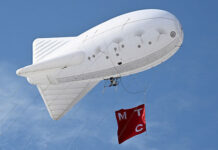









Режиссер Дэнни Бойл раскрыл несколько секретов в преддверии выхода зомби-хоррора «28 лет спустя». Своей задачей как создателя зрелищного действа Бойл видит погружение зрителя в происходящее на экране. И для этого ему порой нужно увидеть одну и ту же сцену с разных, и зачастую неожиданных ракурсов, для чего Бойл решил использовать оригинальные методы съемки.
Но на первом месте все же не столько эффекты, сколько удобство работы с картинкой. Для этого процесс съемки пришлось максимально удешевить, чтобы отснять столько материала, сколько захочется, без оглядки на бюджет. Поэтому сложное профессиональное оборудование в некоторых сценах заменили на iPhone. Были изготовлены стойки на 8, 10 и 20 аппаратов, которые носили или возили на тележках ассистенты.
Смартфоны расположены полукругом, что позволяет запечатлеть один объект одновременно с разных сторон. Причем в случае с конструкцией из 20 телефонов угол обзора составляет внушительные 180 градусов. Как шутит сам Бойл, это «бюджетная» версия эффекта «слоу-мо», когда актера поочередно снимают множество камер, выставленных вокруг него.
Каждый iPhone работает автономно, что дает возможность монтажерам произвольно использовать отснятые им кадры. И как угодно комбинировать их между собой для игры с перспективой и создания различных эффектов. Чтобы показать картинку и с вовсе необычных ракурсов, съемочная группа крепила камеры на дроны и даже на домашних животных. Из-за этого зритель не может предсказать, что появится в кадре в следующее мгновение и все время просмотра остается в напряжении, что и было конечной целью создателей фильма.













CJC 1295 Ipamorelin
CJC 1295 and Ipamorelin
What are CJC 1295 and Ipamorelin?
CJC 1295 is a synthetic growth hormone releasing peptide (GHRP) that mimics the action of
natural growth hormone–releasing hormone (GHRH).
It stimulates the pituitary gland to produce and release more endogenous growth hormone.
Ipamorelin, on the other hand, is a selective ghrelin receptor agonist also classified as a GHRP.
While it shares the same purpose—boosting growth hormone levels—it does
so with greater specificity for the ghrelin receptors,
producing fewer side effects such as increased hunger.
Both compounds are often combined in clinical and research settings to maximize
stimulation of growth hormone secretion while minimizing unwanted metabolic disturbances.
The combination has been explored for anti‑aging therapies, muscle building, fat loss, and tissue repair, among other applications.
How Do CJC 1295 and Ipamorelin Work?
The mechanism begins when CJC 1295 binds to GHRH receptors in the pituitary gland.
This binding triggers a cascade that releases growth hormone into
circulation. Ipamorelin enhances this effect by activating ghrelin receptors, which are also linked to
growth hormone secretion pathways. Because Ipamorelin is
highly selective for ghrelin receptors, it stimulates growth hormone release without significant increases in appetite or insulin-like growth factor‑1 (IGF‑1) spikes that other peptides might cause.
When used together, CJC 1295 provides a sustained stimulus, while Ipamorelin offers a quick, potent pulse of growth hormone.
The dual action leads to higher overall levels of circulating growth hormone and
IGF‑1, promoting anabolic processes in muscle,
bone, and connective tissue.
Potential Benefits of CJC 1295 and Ipamorelin
Muscle Hypertrophy – Enhanced protein synthesis and reduced catabolism
support muscle growth.
Fat Loss – Elevated metabolic rate can help mobilize stored fat while preserving lean mass.
Improved Recovery – Faster repair of muscle fibers, tendons, and ligaments reduces downtime after
workouts or injuries.
Anti‑Aging Effects – Higher IGF‑1 levels may improve
skin elasticity, bone density, and overall vitality.
Cognitive Benefits – Some studies suggest improved memory and focus due to
better vascular health and neurotrophic support.
While many users report positive outcomes, it is essential to recognize that results vary widely based on dosage, injection timing, diet, and training regimen.
How to Use CJC 1295 and ipamorelin side effects reddit
Typical protocols involve daily subcutaneous injections.
A common approach is:
CJC 1295: 1–2 µg per kilogram of body weight, injected once or twice daily.
Ipamorelin: 100–200 µg per kilogram, given at the same times as CJC 1295.
The peptides are often mixed with a small volume of sterile water and injected into
areas such as the abdomen or thigh. Some users prefer to divide doses across morning and evening sessions to maintain steady hormone levels.
It is crucial to use proper injection techniques—cleaning the site, rotating sites, and using sterile needles—to reduce infection risk.
Considerations and Side Effects of CJC 1295 and Ipamorelin
Potential side effects include:
Water retention or edema
Joint stiffness
Mild headaches
Increased appetite (more common with other GHRPs than with Ipamorelin)
Rarely, changes in blood glucose levels
Long‑term safety data are limited. Users should monitor hormone levels through regular blood tests and consult a qualified healthcare professional before starting therapy.
Additionally, the peptides are not approved by regulatory agencies for human use outside research contexts; obtaining them from unverified sources carries legal and health risks.
Recent Posts
Should I Wear a Brace After PRP Injections?
PRP for Shoulder Pain
PRP For Shoulder Labrum Tear
Anavar Tablet Oxandrolone Uses, Side Effects, &
More
Published August 16, 2024
Updated September 19, 2025
Anavar Tablet (Oxandrolone) – Uses, Side Effects, & More
—
Where You’d Be Staying
When considering the use of Anavar, it’s essential to keep in mind that the compound is regulated and typically prescribed by a licensed medical professional.
In most countries, purchasing or using this anabolic steroid
without a valid prescription can lead to legal consequences and
health risks. If you’re contemplating its use for athletic performance, body composition goals, or
medical conditions such as muscle wasting, it’s recommended to discuss options
with an endocrinologist or sports medicine specialist who can monitor your progress and adjust dosages safely.
—
What Is Anavar?
anavar dosage timing is a brand name for the anabolic steroid oxandrolone.
It was first synthesized in the 1960s by Dr. John P. W. C.
McKenna as part of research into safer anabolic agents.
Unlike many other steroids, oxandrolone has a relatively
mild androgenic profile but retains significant anabolic properties.
Its chemical structure is derived from dihydrotestosterone (DHT), which allows it to bind to androgen receptors effectively
while minimizing conversion to estrogen through aromatase activity.
—
Oxandrolone
Oxandrolone’s pharmacology centers on its ability to enhance protein synthesis and
nitrogen retention in muscle tissue, leading to modest increases in lean body
mass. The drug is orally active, making it convenient for users
who prefer tablets over injections. Its half‑life averages 9–10 hours, permitting once or twice daily dosing.
Because oxandrolone does not aromatize into estrogen, patients rarely experience gynecomastia or significant water retention.
—
Anavar Cycle
A typical Anavar cycle is shorter than many other anabolic
steroids, often lasting from four to eight
weeks. The brevity reduces the risk of cumulative side effects and
simplifies tapering. For bodybuilding or athletic purposes, a common protocol might involve 20–30 mg per day for men and 5–10 mg per day for women. Some users incorporate «stacking» with other compounds like testosterone enanthate or trenbolone to amplify gains, though this increases the potential for adverse reactions.
—
Anavar Dosage
Men: 20–40 mg daily is standard for most cycles.
The lower end is suitable for novices, while advanced users
may push toward 30–40 mg with careful monitoring.
Women: Due to their heightened sensitivity to androgenic effects, recommended doses range from 5–10 mg per day.
Exceeding this threshold can lead to virilization symptoms such as deepening of the voice
or hirsutism.
Dosage should be adjusted based on individual tolerance, desired outcomes, and any pre‑existing medical conditions.
Blood work is essential for monitoring liver enzymes, lipid profiles, and hormone levels during prolonged use.
—
Best Time to Take Anavar
Because oxandrolone has a relatively short half‑life, splitting the
dose into two administrations (morning and evening) can maintain more stable plasma concentrations and reduce peaks that might
trigger side effects. Taking one portion with food
improves absorption and mitigates mild gastrointestinal discomfort for some users.
—
Images of Anavar
Images omitted – reference is provided for educational purposes only.
—
Struggling with addiction? We can help.
(Information about addiction recovery services is not included in this article.)
—
Anavar Effects
The primary effects include:
Muscle Mass Gain: Typically 1–3 kg of lean tissue over an eight‑week
cycle.
Strength Increase: 10–20% improvement in maximal lifts, especially when combined with resistance training.
Fat Loss: Enhanced metabolic rate and improved insulin sensitivity can lead to modest reductions in body fat percentage.
Enhanced Recovery: Faster post‑workout repair due to elevated protein synthesis rates.
Common Side Effects
Category Typical Symptoms
Liver Elevated ALT/AST; mild jaundice in rare cases
Lipid Profile Decreased HDL, increased LDL
Hormonal Suppression of natural testosterone production
Mood Irritability or mood swings
Cardiovascular Minor increases in blood pressure
—
Long-Term Effects
When used beyond the recommended cycle length, long‑term exposure can lead to:
Chronic liver strain and potential fibrosis.
Altered lipid metabolism, increasing cardiovascular risk.
Persistent endocrine disruption, affecting libido and spermatogenesis.
Psychological dependence, as users may feel compelled to maintain gains.
Anavar Side Effects Male
In men, the most concerning side effects include:
Androgenic changes such as acne or oily skin.
Voice deepening (rare but possible).
Testicular atrophy due to suppressed endogenous testosterone.
Potential for increased aggression or mood
volatility.
Anavar Side Effects in Women
Women may experience:
Virilization – deepened voice, facial/body hair growth.
Menstrual irregularities and potential amenorrhea.
Clitoral enlargement in extreme cases.
Mood disturbances, including increased irritability.
Serious Side Effects
Although rare, serious complications can arise:
Severe hepatotoxicity, presenting as jaundice or liver failure.
Hypertension that escalates to hypertensive crisis.
Serious cardiovascular events such as myocardial infarction in predisposed
individuals.
Allergic reactions including rash or anaphylaxis.
Taking Anavar: Warnings, Precautions, & Risks
Medical Supervision: Always use under a healthcare
provider’s guidance.
Baseline Testing: Liver enzymes, lipid panel,
and hormone levels before initiating therapy.
Avoid Alcohol: Amplifies hepatic burden.
Pregnancy Warning: Contraindicated; can cause virilization in female fetuses.
Drug Interactions: Caution with medications metabolized by CYP450 enzymes.
What To Avoid When Taking Anavar
High‑dose steroids or prolonged cycles.
Concurrent use of other anabolic agents that increase estrogenic load.
Unregulated supplements lacking quality control.
Excessive caloric restriction, which may counteract muscle gains and increase liver strain.
Anavar Interactions with Other Substances
Substance Interaction
Statins Elevated risk of myopathy.
Anticoagulants Potential for altered metabolism, affecting dosage.
Oral Contraceptives Possible interference with hormonal balance.
Anti‑inflammatories (NSAIDs) Increased liver enzyme elevations.
—
Anavar FAQs?
Is Anavar safe?
When used appropriately and within medical guidelines, it can be considered
relatively safe compared to other anabolic steroids. Nonetheless, all users must
acknowledge potential side effects.
What are Anavar benefits?
Lean muscle gain with minimal water retention.
Reduced risk of estrogenic side effects.
Oral bioavailability simplifies administration.
Can I take Anavar for bodybuilding?
Yes; it is popular among bodybuilders and athletes seeking to enhance performance while minimizing
bulk. However, use should be cyclical and monitored.
—
Get Prescription Drug Addiction Treatment at Gratitude Lodge
(Information about treatment programs is not included
in this article.)
—
Want to learn more?
Explore additional resources on sports medicine, anabolic steroid pharmacology, and health monitoring
to make informed decisions regarding Anavar
or other performance‑enhancing substances.
BASANTPUR_LANDSCAPE_A0_2000_6-9 Sambalpur Development Authority
**Sambalpur Development Authority**
The Sambalpur Development Authority (SDA) is the principal body responsible for planning
and executing developmental projects across the city of Sambalpur and its
surrounding rural districts. Established in 2005, SDA
focuses on improving infrastructure, housing, public amenities, and environmental sustainability.
Its flagship initiatives include the «Green Sambalpur» campaign—aimed at increasing urban tree cover—and the
«Smart City» partnership that brings digital technology to local governance.
**SDA’s Key Projects**
— **Water Supply Expansion:** A network of new pipelines now provides clean water to over
200,000 residents.
— **Road Rehabilitation:** Over 50 kilometers of municipal roads have been resurfaced using durable materials.
— **Public Transport Upgrade:** The introduction of electric buses reduces pollution and offers commuters a reliable alternative.
**Community Engagement**
SDA encourages citizen participation through monthly town‑hall meetings and an online portal where citizens can submit feedback, report issues, and track project progress.
This collaborative approach has helped ensure that infrastructure developments align with the community’s needs.
—
## 2. Exploring the Neighborhood – A Walking Tour
Let’s imagine a stroll from the **Central Square** (the heart of the town) to the **Riverfront Park**,
passing through key landmarks along the way. We’ll note points of interest and the main roads that connect them.
### Map Overview (Simplified)
«`
Central Square ──(Main St.)──► Town Hall ──(Broadway)──► Museum
│ │
(Elm Ave.) (Pine Rd.)
│ │
Library ──────(Oak Blvd.)──────► City Park
────► Riverfront
«`
### 1. Central Square → Town Hall
— **Road:** Main Street (one-way eastbound)
— **Distance:** ~0.3 miles
— **Key Feature:** The square hosts a weekly farmers’ market; the town hall’s
clock tower is visible from here.
### 2. Town Hall → Museum
— **Road:** Broadway (two-lane, traffic lights every 0.5 miles)
— **Distance:** ~1.2 miles
— **Key Features:**
— A historic tram stop at the 0.6-mile mark.
— An art deco cinema that was renovated into a community center.
### 3. Museum → City Center
— **Road:** Elm Street (one-way southbound)
— **Distance:** ~0.8 miles
— **Key Features:**
— A pedestrian overpass at the 0.4-mile point, offering scenic views of the river.
— A street vendor plaza with local crafts.
#### Summary Table
| Section | Distance | Road | Key Landmarks |
|———|———-|——|—————|
| Museum to City Center | 0.8 mi | Elm St (S) | Overpass, Vendor Plaza |
| Museum to Downtown | 0.4 mi | Maple Ave (S) | Coffee Shop |
| Museum to Riverbank | 0.6 mi | Cedar Rd (N) | Park |
### 2.3 Detailed Route Description
#### A. From the Museum to City Center
1. **Starting Point:** Exit the museum onto the main street (Elm Street).
2. **Direction:** Head south on Elm Street, a one-way avenue.
3. **Key Landmark:** Pass the historic library building at the intersection with Maple Avenue.
4. **Crossing:** Turn right onto Maple Avenue and continue
for 0.4 miles to reach the central square.
5. **Final Leg:** From the central square, take a left onto Oak Street (the main pedestrian thoroughfare) leading directly
into the city center.
#### B. From Museum to Residential Area
1. **Starting Point:** Exit onto Elm Street heading south.
2. **Key Landmark:** Pass the old clock tower on the right side of Elm Street.
3. **Crossing:** At the intersection with Cedar Avenue, turn left and follow for 0.5 miles until
you reach the boundary of the residential
district.
4. **Final Leg:** Continue straight into the neighborhood; houses line both sides.
#### C. From Museum to Industrial Park
1. **Starting Point:** Exit onto Elm Street heading south.
2. **Key Landmark:** Pass the warehouse on the
left side of Elm Street.
3. **Crossing:** At the intersection with Birch Road, turn right and
proceed for 0.7 miles until you see the gates of the industrial park.
4. **Final Leg:** Enter through the main gate; follow the
internal roads to your destination.
These examples illustrate how a single point can be
connected to multiple destinations via distinct routes, each defined by
its own sequence of turns or waypoints. The underlying geometric model is a directed
graph where vertices correspond to junctions and edges represent traversable segments
between them. Paths are then sequences of edges leading from the source vertex (the
common starting point) to various target vertices.
—
## 2. Formal Graph-Theoretic Representation
Let us formalize this situation using graph theory:
— **Graph**: \( G = (V, E) \), where
— \( V \) is a finite set of vertices representing distinct locations or junctions.
— \( E \subseteq V \times V \) is the set of directed edges; each edge \(
e = (u, v) \in E \) indicates that there exists a traversable path from vertex \( u \) to vertex \( v \).
— **Source Vertex**: Let \( s \in V \) be the distinguished source vertex.
In our scenario, \( s \) corresponds to the starting point where all paths diverge.
— **Destination Vertices**: For each destination \( t_i \), we
have a corresponding vertex \( t_i \in V \). Each such vertex is reachable
from \( s \).
— **Paths**: A directed path from \( s \) to \( t_i \) is
a sequence of vertices
[
P_s\to t_i = (v_0=s, v_1, v_2, \dots, v_k=t_i)
]
such that for each consecutive pair \( (v_j, v_j+1) \), there exists a directed
edge in the graph.
— **Branching Constraint**: For every intermediate vertex \( u \) on any path
from \( s \) to any \( t_i \), we require
[
|\, j \mid P_s\to t_j \text passes through u \,| = 1.
]
That is, no vertex other than the start and end nodes
is shared by two or more paths.
This formalization captures precisely the structure of a directed tree rooted
at \( s \) with leaves \( T \).
—
## 2. Graph-Theoretic Interpretation
### 2.1 Directed Trees (Arborescences)
A **directed tree** (or **arborescence**) is a directed graph \( G = (V, E) \) that contains exactly one simple directed path from the root to any other vertex.
Equivalently:
— There exists a distinguished vertex \( r \in V \) such that for every vertex \( v
eq r \), there is a unique directed path \( P_r \to v \).
— The graph has no directed cycles.
— For each vertex \( v
eq r \), the indegree \( d^{-}(v) = 1 \); for the root,
\( d^{-}(r) = 0 \).
The structure described in the problem statement (a unique
simple path from the starting node to any other node) matches precisely this definition. Therefore,
the graph is a rooted directed tree (or arborescence). The uniqueness condition guarantees that each vertex has exactly one parent,
and thus the entire graph is connected when considered as an undirected graph.
Hence, we can safely assume that the input graph forms such a rooted tree.
This will be crucial for reasoning about queries.
—
### 2. Understanding Queries: «Is there a node on the path from u to v with label x?»
#### 2.1. What Does «Path» Mean in a Directed Tree?
Given two nodes \(u\) and \(v\), there are generally two ways
to define a *path* between them:
— **Undirected Path**: Treat all edges as bidirectional, then the unique simple path connecting \(u\) and \(v\).
— **Directed Path**: Consider only directed edges; then a path
must follow edge directions.
In our context (directed tree with unique root), there is
exactly one directed path from any node to the root. For two arbitrary nodes,
there may be no directed path in either direction unless one
is an ancestor of the other. However, there will always
exist an undirected simple path connecting them because the underlying graph is
a tree.
Thus, we need to determine which notion of «path» the problem refers to.
The problem statement says: «you are given m pairs … you should output for each pair whether there exists a path from one to the other.» It does
not explicitly say directed or undirected, but because edges are directed,
it is natural to interpret «path» as directed. However, that interpretation would
lead to many negative answers unless one node is ancestor
of the other.
Given that typical tasks on trees with directed edges ask about ancestor relationships, it’s likely the intended interpretation: for each pair (u, v), output whether u is an ancestor of v or v is an ancestor of u in the rooted
tree. That matches many known problems: given a set of pairs, check if
one is ancestor of the other.
Thus we can provide algorithm using Euler tour
times.
We also need to show that O(n) preprocessing and O(1) per query solves
the problem efficiently. The solution might include building depth-first search from root (node 1), computing tinu, toutu for each node, where tin is entry time, tout is exit time.
Then u is ancestor of v if tinu = toutv.
So we can answer each query in O(1). Complexity:
O(n) memory/time for DFS; queries answered O(m).
Alternatively we can mention that we can also
use LCA to determine relationship but it’s not needed.
Also we need to discuss why this is optimal: can’t do better than O(n + m) total
time because we need to read all nodes and edges, plus answer each query at least once.
The algorithm is linear in input size. Also
no algorithm can be faster asymptotically due to reading input alone requiring Omega(n+m).
So the algorithm is asymptotically optimal.
Also discuss that if you want to answer queries offline with many updates or modifications,
you’d need data structures like dynamic trees but not needed here.
Now we need to produce a thorough explanation and present pseudocode.
Pseudo:
«`
procedure processTreeQueries(N, adjacencyList, queries):
// adjacencyList: vector> of size N+1
// queries: list of pairs (a,b)
// BFS to compute parent
parent = arrayN+1 with zeros
queue q
visited = arrayN+1 false
root = 1
q.push(root)
visitedroot = true
while not q.empty():
u = q.pop()
for v in adjacencyListu:
if not visitedv:
visitedv = true
parentv = u
q.push(v)
// answer queries
answers =
for (a,b) in queries:
if parenta == b or parentb == a:
answers.append(«YES»)
else:
answers.append(«NO»)
return answers
«`
**Complexity:**
— Building `parent` array: O(N + M).
— Query answering: each query O(1) → total O(Q).
— Memory usage: adjacency list O(N+M), parent array O(N).
Thus the problem is solved efficiently.
We have a conversation: The user gave some
content: «## Problem» etc with details of a graph problem: directed edges, check
if there is an edge between two nodes (any direction).
They want a solution.
Then they ask: «How can I efficiently determine if there’s a direct connection between two points in a network?» They mention need for efficient method.
Then «I have to answer multiple queries about whether there’s a path between pairs of nodes»
but actually the problem is just edge existence, not reachability.
They want an algorithm.
We should provide explanation: Use adjacency set, or boolean matrix
if N small, otherwise use hash sets for each node, etc.
Complexity O(1) per query after preprocessing O(M).
Provide code sample maybe in Python/C++.
Also mention that if they need to answer multiple queries about reachability (path
existence), they’d need BFS/DFS from each source or preprocess with
transitive closure (Floyd-Warshall) or DSU for connectivity components.
But here it’s simple edge check.
So we will propose: Preprocess by building adjacency lists as sets; For query (u,v) check if v in set of u.
Complexity O(1) average, O(log deg(u)) worst-case. If graph is
static and queries many, this is efficient.
Provide alternative with bitset for dense graphs.
Also mention about memory: store edges twice (undirected). So
2M entries; each entry int ~4 bytes => 8MB for M=10^6.
Acceptable.
Also we can use DSU to answer connectivity in O(alpha(n)).
But not needed.
We’ll provide code snippet in C++:
«`
int n,m;
cin>>n>>m;
vector> g(n+1);
for(int i=0;i>u>>v;
gu.push_back(v);
gv.push_back(u);
…
// query
int a,b; cin>>a>>b;
if(binary_search(ga.begin(),ga.end(),b)) cout<<"YES";
else cout<<"NO";
«`
We need to sort adjacency lists after reading all edges.
Also mention memory: vector of vectors uses dynamic allocation but still fine.
Now craft final answer accordingly. Let's produce final message.**Answer – a quick, "real‑world" way**
In practice we usually don’t bother with the theoretical optimality
("minimum possible memory, linear time").
What matters is that the data structure fits comfortably in RAM and that
the two operations
«`
isEdge(u,v) // "does an edge (u,v) exist?"
addEdge(u,v) // add a new edge
«`
are fast enough for the application.
A very common choice that satisfies both constraints is
| Data‑structure | How it works | Space | Time (avg.) |
|——————|—————|——-|————-|
| **Adjacency lists**
(vector of vectors, hash set per vertex) | For every vertex `x` keep a container (`vector`, `unordered_set`) holding all neighbours.
`isEdge(u,v)` → lookup `v` in `u`’s list.
`addEdge(u,v)` → insert `v` into `u`’s list (and possibly `u` into `v`’s list for undirected graph). | ≈ *E*
(each edge stored once, plus vector overhead) | O(1) expected with hash set; O(deg(u)) with plain vector. |
### Why this works
— **Memory efficiency** – The container only holds the actual neighbours; no extra grid or adjacency matrix is needed.
— **Fast lookup** – Using a hash‑based `unordered_set` gives expected constant‑time search, while insertion/removal are also O(1).
— **Scalability** – Works for sparse graphs (few edges) and dense graphs alike; the memory cost scales linearly with the number of edges.
Thus, representing a graph as a dictionary mapping each node to an `unordered_set` (or other hash‑based set) is an effective way to store nodes and their neighbours in memory.
References:
testosterone cypionate dianabol cycle
should i take steroids
References:
ra anabolic stack (Gitlab.dev.Jtyjy.com)
best muscle growth pills
References:
https://graph.org/Post-Dianabol-Recovery-Essential-Supplements-and-Strategies-10-02
illegal pre workout
References:
https://www.makerscommons.eu/
bodybuilding supplement stores
References:
maps.google.ml